



Are you searching for a forex trading app in India that won't land you in legal trouble? That's the right question to ask, because I've seen traders get hit with FEMA penalties simply because they didn't know the rules before depositing money. The legal forex trading apps india landscape is narrower than most YouTube gurus will admit: you can only trade exchange-listed currency F&O contracts on NSE or BSE through a SEBI-registered broker. This review covers exactly which apps are legal, which are traps, and what you need to know before placing a single trade in 2026.
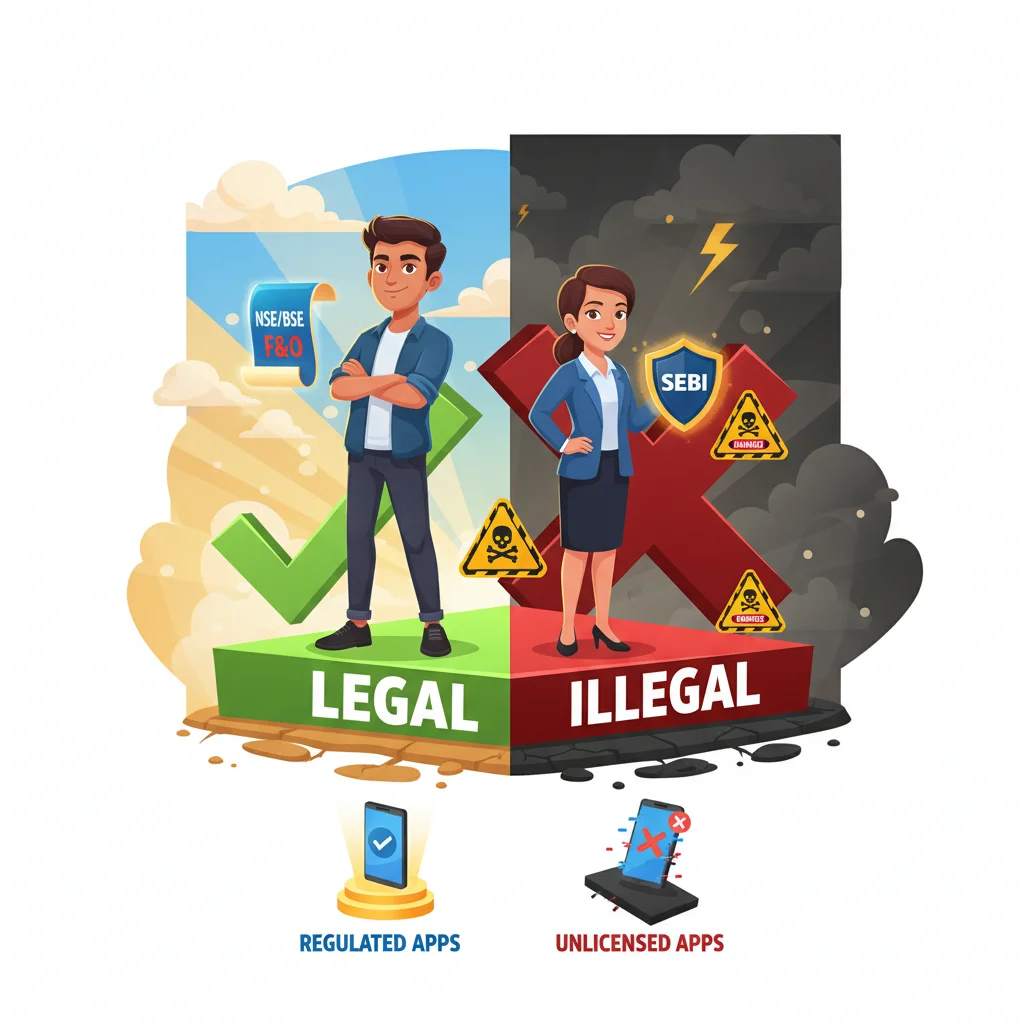
Only SEBI-registered brokers offering NSE/BSE-listed currency F&O contracts are legal in India—most advertised forex apps violate FEMA regulations and can result in severe penalties.
Why Most Forex Apps You See Advertised Are Illegal in India
Let me be blunt: if an app is offering you USD/EUR trading with 1:200 leverage, a "welcome bonus," and promises of withdrawals in USDT, it is illegal for Indian residents. Full stop.
Under the Foreign Exchange Management Act (FEMA), Indian residents are not permitted to trade forex on international OTC platforms. Brokers like Exness, XM, IC Markets, and FBS operate legally in other countries, but using them as an Indian resident is a FEMA violation. The penalty? Up to three times the amount involved, or Rs 2 lakh, whichever is higher. SEBI and RBI have issued multiple joint warnings about this, most recently in 2023 and 2024.
The mechanics of how people get caught are worth understanding. Funds sent abroad via UPI, NEFT, or RTGS to fund an international broker account show up in banking transaction trails. Some traders have been flagged during ITR scrutiny when large cash withdrawals didn't match declared income. I know one trader in Pune who lost Rs 4.8 lakh to a scam platform in 2022 and had zero legal recourse because the platform he used was itself illegal under Indian law.
So what IS legal? Trading currency futures and options contracts on NSE or BSE, through a SEBI-registered stock broker. The currency derivatives segment opened on NSE back in 2008, and it's a well-regulated, liquid market. You get the same price action, you get real hedging utility, and you sleep without worrying about enforcement notices.
Any app offering "international forex" with leverage above 1:50 is a red flag. Don't touch it, no matter how slick the interface looks.

When you realize your favorite forex app has been illegal this whole time.
What Currency Pairs Can You Actually Trade Legally
The NSE currency derivatives segment gives you more pairs than most traders realise.
The four main INR pairs are:
- USD/INR (by far the most liquid)
- EUR/INR
- GBP/INR
- JPY/INR
Beyond those, you also get three cross-currency pairs traded as exchange-listed contracts:
- EUR/USD
- GBP/USD
- USD/JPY
These cross-currency contracts were introduced by NSE in 2015 and don't get enough attention. EUR/USD in particular has decent volume during the afternoon session when European markets overlap with Indian trading hours.
Trading hours are 9:00 AM to 5:00 PM IST, Monday to Friday. This is an important difference from the global forex OTC market which trades nearly 24 hours. For most working professionals in India, the 9-to-5 window is actually manageable. You're not losing sleep watching 3 AM London sessions.
Contract sizes matter too. One USD/INR futures lot is USD 1,000. One EUR/INR lot is EUR 1,000. These are small enough for retail traders to start with reasonable capital while keeping risk manageable. I typically trade 2-5 lots of USD/INR depending on volatility around RBI policy announcements, which tend to cause the sharpest intraday moves in that pair.
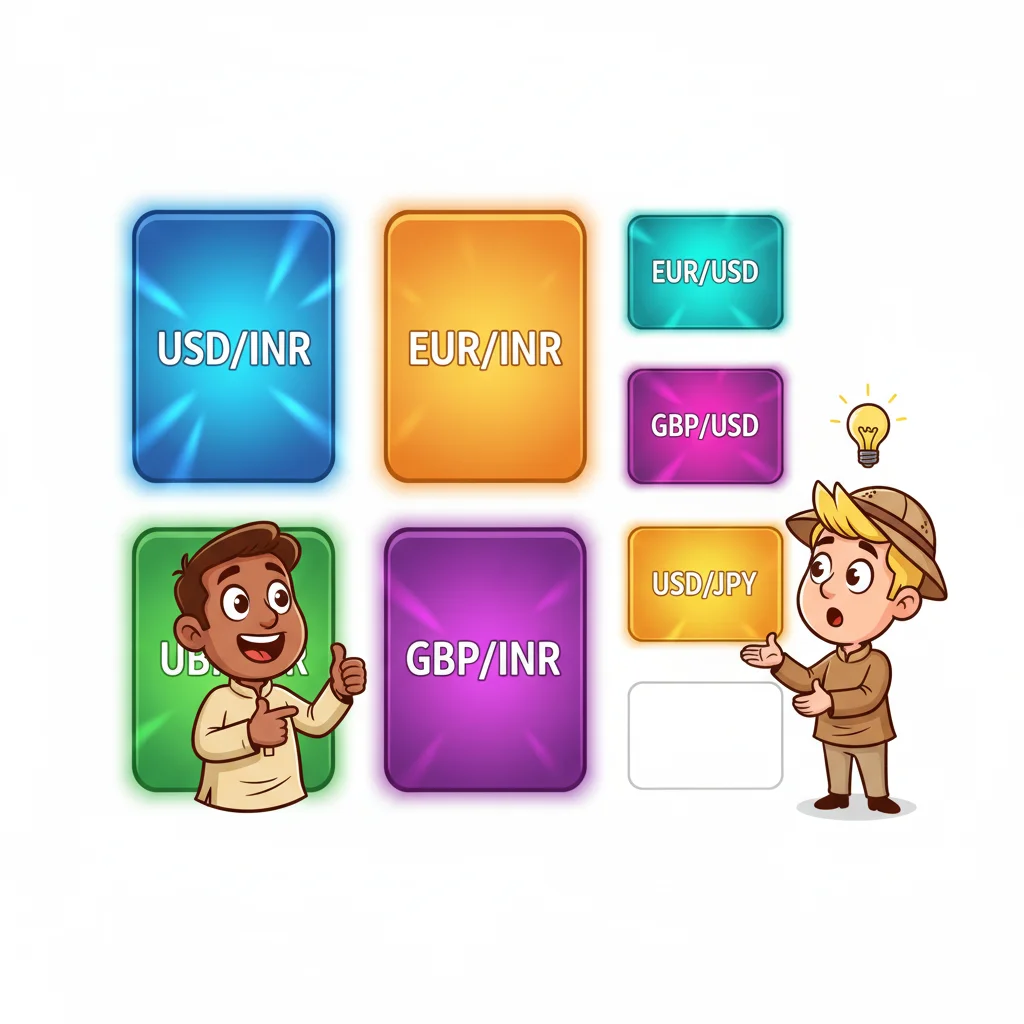
NSE offers 7 legal currency pairs for Indian traders: 4 INR pairs plus 3 cross-currency contracts introduced in 2015.
Zerodha Kite: Still the Default Choice for Most Traders
Zerodha Kite is where most Indian currency traders end up, and there are good reasons for that.
SEBI registration number: INZ000161534. That's the first thing you check. Kite charges a flat Rs 20 per executed order for currency F&O, which is reasonable. Equity intraday gets the same flat rate. There are no percentage-based fees eating into your profits on larger positions.
The interface itself is clean. The chart is powered by TradingView, which means you get real multi-timeframe analysis, drawing tools, and indicator access without paying for a separate charting subscription. For someone trading USD/INR futures, having a functional chart inside the same app where you're placing orders saves time and reduces the chance of price slippage from switching between windows.
What I genuinely like about Zerodha's setup is Varsity, their educational platform. It has a dedicated module on currency and commodity derivatives that explains the basics of futures pricing, basis risk, and hedging. If you're new to currency F&O, reading that module before you start is not optional. I wish it had existed when I started trading in 2012. I made embarrassing mistakes in my first six months because I didn't understand how currency futures settlement worked.
Limitations worth knowing:
- The mobile app can occasionally be slow during high volatility events (I saw this happen during the COVID March 2020 crash and again during INR's rapid depreciation in late 2022)
- Customer support response times are not great for urgent trading queries
- Options chain UI is functional but not as intuitive as Angel One's for options traders
Overall, if you want a reliable, regulated forex trading app india with transparent pricing and strong educational support, Kite is hard to beat. Just know its weaknesses going in.
Angel One and Upstox: Solid Alternatives Worth Considering
Both Angel One and Upstox offer currency F&O trading and are SEBI registered. Angel One's SEBI number is INZ000185137.
Angel One charges Rs 20 per order or 0.05% whichever is lower. For most retail lot sizes in currency futures, you'll end up paying the flat Rs 20. What sets Angel One apart is the ARQ Prime AI advisory feature. It's not perfect, and I wouldn't follow it blindly, but it does flag macro events that could move the rupee, which is useful for planning your week. The options chain interface is genuinely better than Kite's for visualising IV and OI data side by side.
Upstox also charges Rs 20 per order flat. The UI is the sleekest of the three. If you care about how an app looks and feels, Upstox wins on aesthetics. The order execution speed is good. Their margin calculator is well-designed. One thing I appreciate about Upstox is that their app doesn't constantly push irrelevant notifications about IPOs and mutual funds when you're trying to focus on a currency trade.
Where Upstox falls short: the charting tools are slightly less feature-rich than Kite's TradingView integration. For pure technical analysis on currency pairs, Kite still edges it out.
Both apps are legitimate sebi approved forex app options. Both let you trade the full range of currency pairs on NSE. The honest answer is that for most traders, the difference between Angel One and Upstox comes down to which interface they prefer after a one-week trial. Try both with a small account before committing.

Discovering solid alternatives like Angel One and Upstox that actually work.
ICICI Direct and Groww: When Bank-Linked or Simple Wins
These two occupy different ends of the spectrum.
ICICI Direct is the bank-linked option, sitting inside the ICICI Bank environment. If you already bank with ICICI, the fund transfer experience is genuinely smoother than with standalone discount brokers. No NEFT delays, no waiting for RTGS to clear. Funds move instantly between your savings account and trading account. For traders who hate the friction of funding a separate broker account, this matters.
The downside is pricing. ICICI Direct's brokerage fees are higher than the Rs 20 flat fee structure of discount brokers. They still follow a percentage-based model on some segments. For active currency traders executing multiple lots per day, this adds up to a significant cost difference over a month.
Groww is the newer entrant and has recently added currency F&O to its platform. Groww's strength is onboarding simplicity. The KYC process is genuinely fast, using Aadhaar-based eKYC, and most users complete account setup in under 20 minutes. The interface is designed for new investors, which means it's clean and uncluttered but lacks advanced features like multi-leg options strategies.
For a first-time currency trader who just wants to hedge a dollar-denominated exposure (say, an IT professional who receives USD salary in ESOP form), Groww makes sense. For an active trader who watches tick charts and trades news events, it's not the right tool.
Both are legal. Both are worth knowing about. Neither is the best forex app india for a seasoned trader.
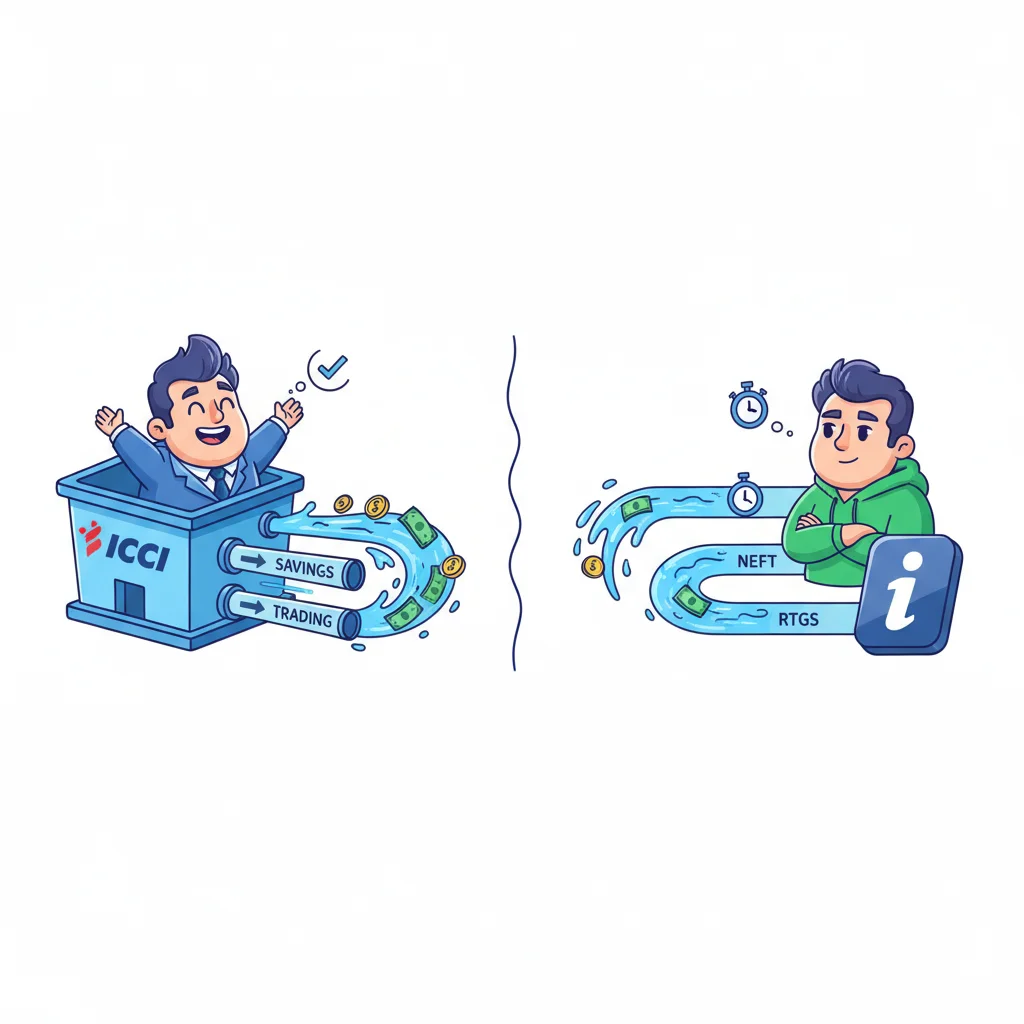
ICICI Direct eliminates fund transfer delays through instant bank integration, while standalone brokers require traditional NEFT/RTGS processing that can take longer.
Tax on Currency F&O Trading in FY 2025-26: What You Must Know
This section will save you money. Pay attention.
Currency F&O profits in India are treated as non-speculative business income under the head "Profits and Gains from Business or Profession" (PGBP). This is different from equity intraday trading, which is speculative. The distinction matters because non-speculative losses can be carried forward for 8 years and set off against future business income.
You file ITR-3. Not ITR-2. Not ITR-1. ITR-3, because you're declaring business income. Many traders get this wrong and face scrutiny later.
Slab rates apply to currency F&O profits. If your total income including currency trading gains falls in the 30% bracket, that's what you pay. There's no flat 15% like equity STCG or 10% LTCG. This actually disadvantages high-income traders who might think currency derivatives are similar to stock options in tax treatment. They're not.
For FY 2025-26, watch out for the STT changes effective April 2026:
- Currency futures: STT rate is 0.05% of the contract value
- Currency options: STT rate is 0.15% on option premium at exercise
These aren't massive numbers per trade, but they compound fast for high-frequency traders. If you're trading 50 lots of USD/INR futures daily, run the STT numbers before you build a trading strategy around tight margins.
One more thing: if your currency F&O turnover exceeds Rs 10 crore in a financial year, you need a tax audit under Section 44AB. Most retail traders won't hit that, but it's worth knowing the threshold.
Get a CA who understands derivatives taxation. Generic tax preparers often misclassify F&O income, and that creates assessment issues down the line.
Red Flags: Apps and Platforms You Must Avoid in 2026
The list of scam currency trading apps targeting Indian traders got longer in 2025, not shorter.
Here's what to watch for:
- Leverage above 1:50: Legal NSE currency futures have regulated margins set by SEBI. Any app offering 1:100 or 1:500 leverage is operating outside Indian law.
- Bonuses on deposit: SEBI-registered brokers do not offer deposit bonuses. If an app gives you a "100% welcome bonus" on your first Rs 10,000, it's a scam or an illegal offshore broker.
- WhatsApp or Telegram-based signal services that direct you to a specific "platform": These are almost always pig-butchering scams or affiliated with illegal offshore brokers. The operators typically disappear after collecting funds.
- Apps that are not listed on SEBI's registered intermediaries database: You can verify any broker's SEBI registration at sebi.gov.in. Takes two minutes. Do it.
- Withdrawal problems: Legitimate currency trading app platforms process withdrawals to your linked bank account within 24-48 hours. If an app delays withdrawals, adds "taxes" before you can withdraw, or requires you to deposit more to unlock profits, that's a fraud structure.
- "International forex" paired with UPI payment options: This one is particularly dangerous because it feels local. UPI doesn't make it legal. Indian payment rails being used to fund an illegal offshore trading account still violates FEMA.
I've tracked at least three Telegram groups in 2024 running coordinated pump signals for USD/INR, directing followers to illegal offshore platforms. The people running them are not traders. They're affiliates getting paid per deposit. Don't be the deposit.
If you're unsure whether an app is legal, the answer is simple: check SEBI's website, confirm the broker's registration number, and verify that they offer NSE/BSE-listed contracts only.

Spotting the red flags too late and realizing you almost fell for a scam platform.
How to Start Currency F&O Trading the Right Way
Starting is simpler than most people think. Here's the actual process.
First, open a trading and demat account with a SEBI-registered broker from the list above. Zerodha, Angel One, and Upstox all have fully digital onboarding using Aadhaar-based KYC. You'll need your PAN card, Aadhaar, a cancelled cheque or bank statement, and a selfie. Most accounts are activated within one business day.
Second, activate the currency derivatives segment specifically. Some brokers don't activate it by default. Log into your account, go to account settings, and enable currency F&O. This usually requires a simple self-declaration.
Third, transfer funds. From any Indian bank account via NEFT, RTGS, or bank transfer to your broker's client account. UPI is also accepted by most brokers now for smaller amounts. Keep your initial capital conservative. Start with Rs 25,000 to Rs 50,000 and trade one lot at a time to understand how margin requirements and mark-to-market work in practice.
Fourth, learn the contract specifications before trading. One USD/INR futures contract is USD 1,000 notional. The margin requirement (SPAN plus exposure) varies but is typically around Rs 2,000 to Rs 3,000 per lot. Understand the settlement cycle: USD/INR futures settle two working days before the last business day of the expiry month.
Fifth, start with the spot month contract and focus on USD/INR. It has the tightest bid-ask spread and the highest volume. Jumping straight into cross-currency pairs like EUR/USD on NSE as a beginner is a mistake I'd steer you away from. The liquidity is thinner and price discovery is less transparent.
The whole process from zero to first legal trade takes about three to five business days. That's it. There's no reason to touch an illegal platform when the legal route is this accessible.
Disclaimer: This article is for educational purposes only and does not constitute investment advice. Forex and CFD trading carries significant risk of loss. Past performance is not indicative of future results. Always do your own research and consider your financial situation before trading. Never risk money you cannot afford to lose.